
Limestone, and all the water that disappears into it
A plateau with no rivers, canyons carved out of nothing, and a beech forest by the sea.
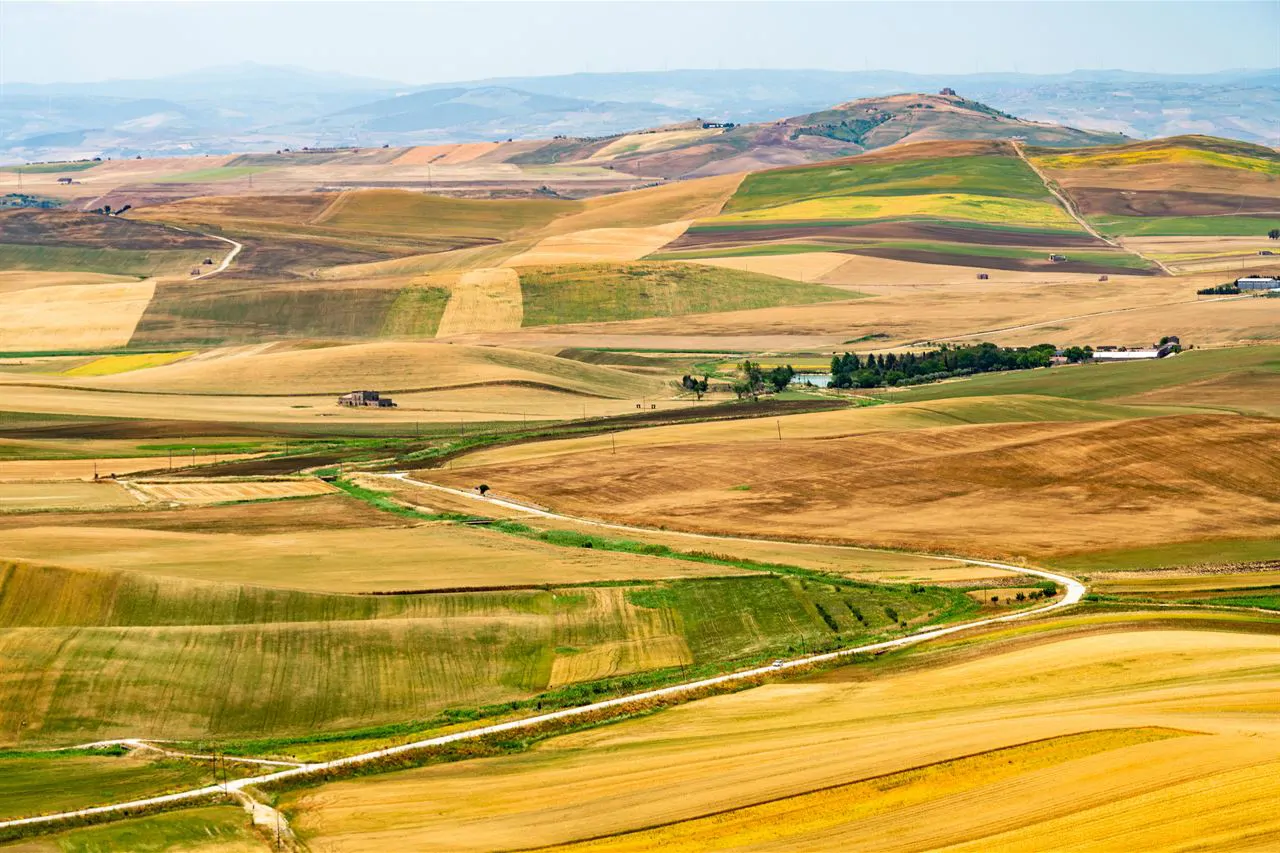
Puglia is made almost entirely of limestone, and limestone drinks the water. That is why the region has no rivers worth the name: the rain goes into the fissures, runs underground and comes back out at coastal springs or straight into the sea. The only surface water is the Gargano lakes, Lesina and Varano, which are brackish lagoons cut off from the sea by a bar of sand.
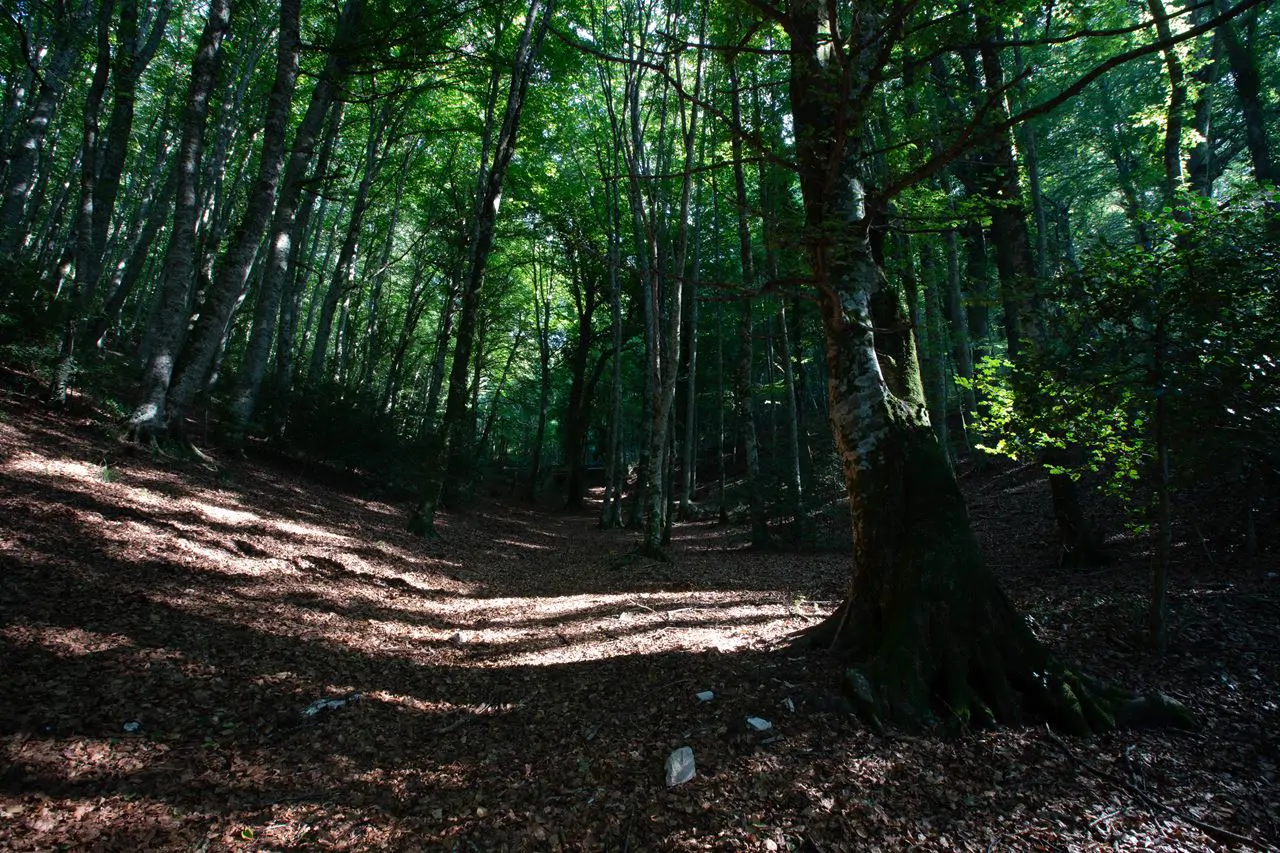
The Gargano
It is the spur, and geologically it has nothing to do with the rest of Puglia: it was an island and became attached to the peninsula. It rises to 1,065 metres at Monte Calvo and holds on its top the Foresta Umbra, eleven thousand hectares of beech and turkey oak that since 2017 have been Unesco heritage along with the other ancient beech forests of Europe. Seeing beech trees fifteen kilometres from a beach does not happen often.
The Murge and the gravine
In the centre lies the Murge plateau, bare stone, dry-stone walls and grazing, with the Alta Murgia national park protecting the barest part of it. Where the limestone splits open the gravine appear: canyons narrow and up to a hundred metres deep, their walls pierced by caves that have served as houses and churches. The largest are around Massafra, Laterza and Gravina in Puglia.
The coasts
Eight hundred and sixty-five kilometres, the longest coast of any region on the Italian mainland. They come in three kinds: white cliff on the Gargano and the Adriatic Salento, very long beaches on the Tavoliere and the Ionian coast, low rocky shore between Bari and Brindisi. The islands are the Tremiti, off the Gargano, and no others.
The Tavoliere
Between the Gargano and the Murge opens the Tavoliere delle Puglie, Italy's second plain after the Po: three thousand square kilometres of durum wheat, without a rise in it, with the towns few and large. In June it is yellow from end to end, and in August it is stubble.