
The heel, the spur, and sixty million olive trees in between
Four million inhabitants and the flattest region in Italy.
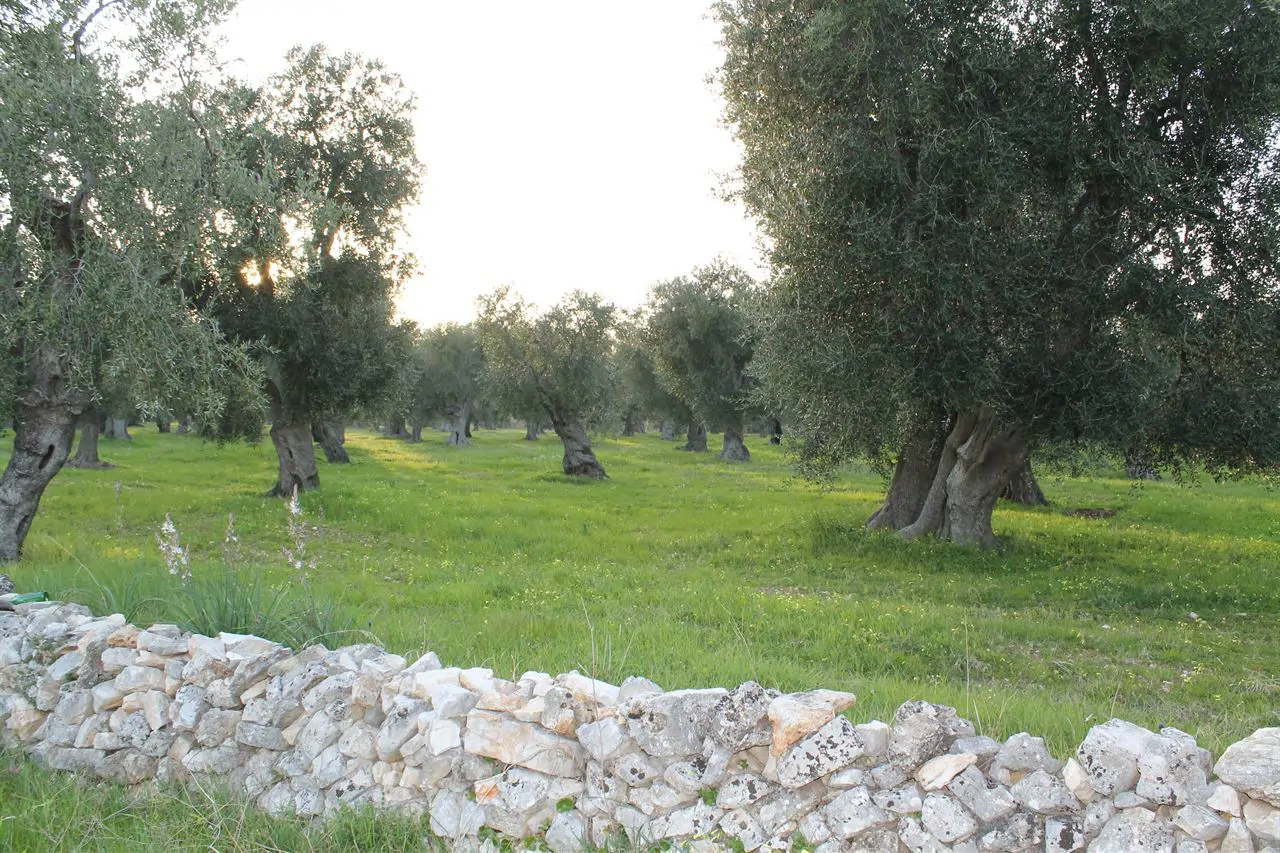
Puglia runs four hundred kilometres from north to south and is narrow everywhere: from the Adriatic to the Ionian, at its widest, is little more than a hundred kilometres. Half the territory is plain, the rest low hills, and the only relief that can be called a mountain is the Gargano. Which is why you see all of it from the road.
How it is laid out
The design is simple: the Tavoliere, Italy's second plain after the Po, takes up the whole north; then comes the Murge plateau, rising to a little over six hundred metres, all limestone and dry-stone walls; then the Salento, lower still, with sea on both sides. The only thing outside that scheme is the Gargano, a block of limestone jutting into the Adriatic.
There are around sixty million olive trees, and the region alone makes almost half of Italy's olive oil. Since 2013 xylella has killed most of the centuries-old trees of the Salento, and the landscape there has changed: replanting goes on, but a three-hundred-year-old olive tree is not replaced.
Where the campsites are
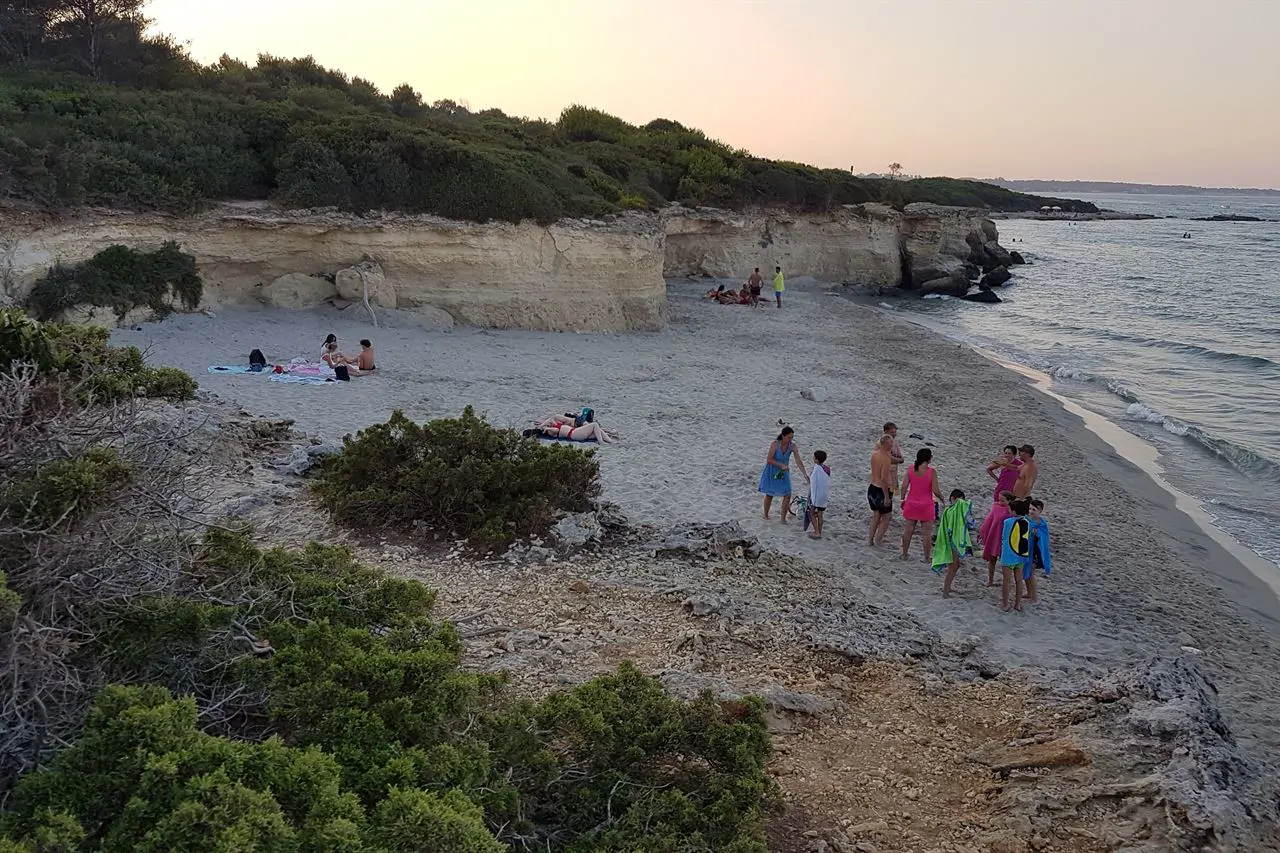
Almost two thirds of the region's sites are on the Gargano: campsites and holiday villages in pine woods, above cliffs or on white pebble beaches, often with steps down to the water. In the Salento they are smaller and nearer the towns. In the province of Taranto there are none, and around Bari very few.
In Puglia you always drive straight, and you always end up at the sea.
A joke the Apulians make about themselves, and it is true
How to plan it
The region is long: from the Gargano to Leuca is nearly five hundred kilometres and five hours' driving. You do not base yourself once. Whoever stays on the Gargano visits the Gargano, the Tremiti and at most Castel del Monte; whoever stays in the Salento does Lecce, Otranto, the Valle d'Itria and the gravine. They are two different holidays.
Summer is hot and dry, and in August the Salento beaches really do fill up. June and September give the same sea with half the traffic, and in May and October the interior is pleasant to tour.